
Anthropic's $63 billion AI-compute financing: who funds the boom, and who bears the risk?
Broadcom and four financial partners announced a $63 billion structure to buy XPU accelerators and networking equipment for lease to Anthropic, with deliveries expected from 2027. The deal shows how AI infrastructure is moving onto asset-finance and private-credit rails, but it does not by itself prove that demand or returns will cover the commitments.
Bayna Markets is a financial markets news and analysis platform.
Popular search topics
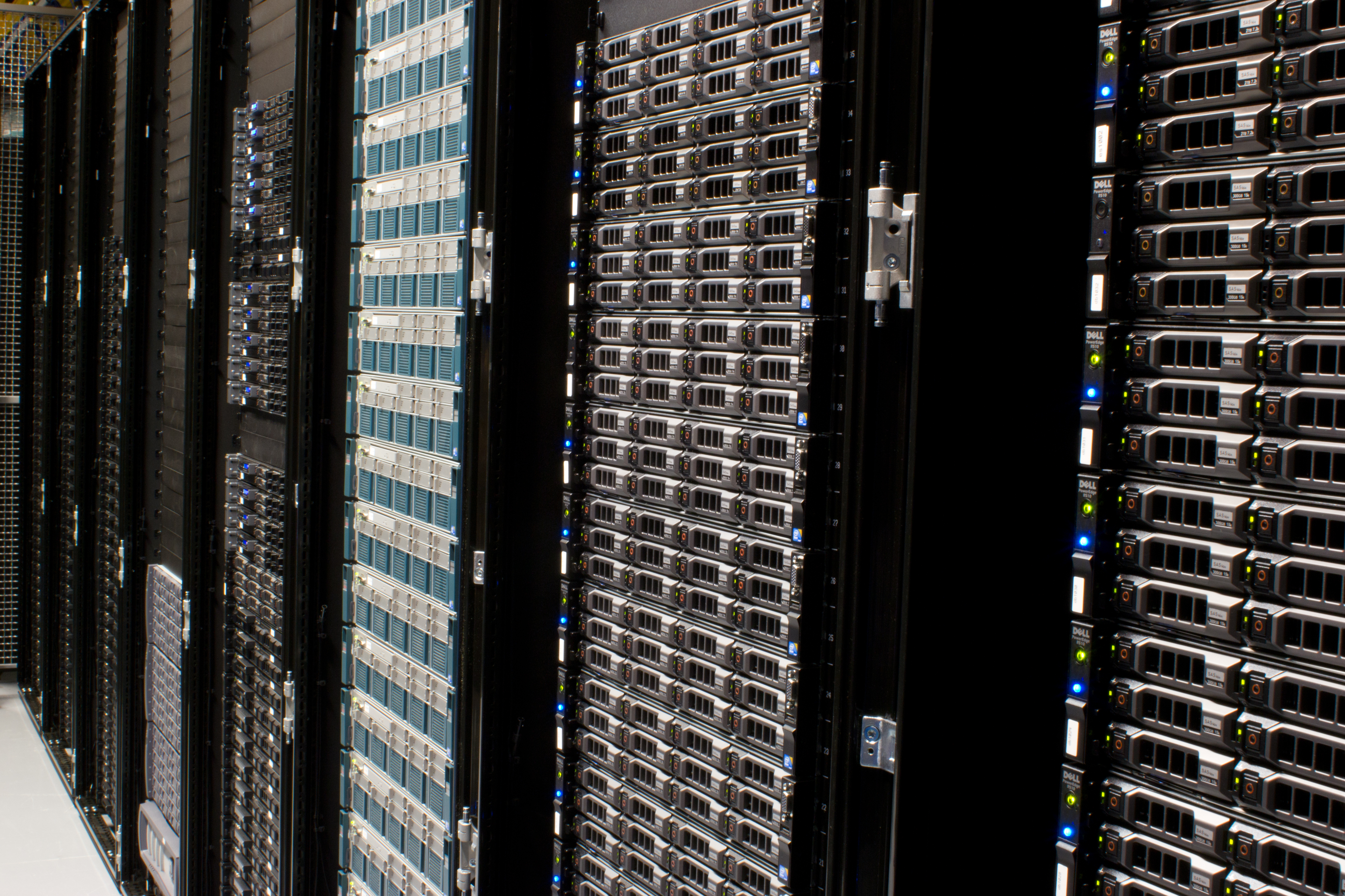
Image: Victor Grigas / Wikimedia Foundation · CC BY-SA 3.0
On October 26, 2026, Bank of America, Blackstone, Citi and Morgan Stanley announced committed financing of up to $63 billion to deploy AI-compute capacity using Broadcom technology for Anthropic. Under the joint announcement, a newly formed special-purpose vehicle will buy Broadcom XPU accelerators and networking solutions, then lease the equipment to Anthropic. Deliveries are expected to begin in calendar 2027. The headline amount is not revenue Broadcom has already earned, nor is it a single $63 billion cash payment by Anthropic on announcement day.
The financing waterfall matters as much as its size. Bank of America, Citi and Morgan Stanley are arranging the first-lien tranche; Blackstone is the committed provider for the lower-priority portion of the second lien. Broadcom says it will provide residual-value support to the vehicle for an amount equivalent to the first-lien financing. That support could limit some lenders' loss if equipment is worth less at the end of its use, but it is not a guarantee of all debt or of the purchase price. The announcement does not spell out every term, including draw schedule, maturities, pricing and default protections. It would therefore be wrong to treat the full $63 billion as cash already advanced or as debt immediately due in full from Anthropic.
The structure separates equipment funding from the tenant's immediate operating balance sheet and lets financiers assess risk against assets, contracts and expected cash flows. It may enable AI firms to build data-center capacity without paying cash for every asset up front. The trade-off is that the economics depend on lease quality, whether accelerators can be redeployed, how quickly they become obsolete, and the concentration of exposure to one customer and technology. A fall in chip resale value or unused compute capacity could weaken the transaction even if the headline commitment remains unchanged.
Anthropic's SEC registration statement provides important context, not a verdict on the company. It reported first-half 2026 revenue of $16.286 billion, up from $1.163 billion in the comparable 2025 period, and an operating loss of $693 million. Net loss was $80.748 billion, but roughly $72.388 billion came from changes in fair value of convertible instruments and related liabilities; net loss is therefore not simply the company's operating cash burn. At the same time, compute and infrastructure expense reached $8.945 billion in the first half, illustrating why access to capacity and financing is central to the investment case.
Revenue growth, accounting losses and compute commitments should be read separately. Rapid sales growth supports the case that commercial demand exists, but does not guarantee durable margins or positive cash flow. A loss from revaluing financing instruments is not the same as cash lost through operations, yet it does reveal a complex capital structure and possible shareholder dilution. Long-term leases can create obligations even if demand slows or models become more efficient. Investors need to compare financing costs, utilization, returns per unit of compute and the schedule of contractual obligations.
The deal lands amid a broader wave of AI-infrastructure financing, in a week dominated by major technology earnings and the Federal Reserve decision. AP reported on October 27 that Broadcom shares were up 4.2% during the trading snapshot it covered, alongside gains in other AI-linked stocks; that snapshot does not establish that this deal alone caused the move. Demand for custom accelerators and high-performance networking may support suppliers, but investors will also watch capital spending, debt-funded expansion and customers' ability to turn infrastructure outlays into sales and profits.
A special-purpose vehicle does not make risk disappear. Lenders face credit, liquidity and equipment-recovery risks; Broadcom faces execution, concentration and potential delivery-delay risks; Anthropic takes on lease obligations and compute capacity that may not be easy to scale down. Power availability, data-center construction, chip supply chains, competition, technological change and regulation also matter. Deliveries are expected from 2027, so the timeline is a stated expectation, not capacity already operating today.
The next evidence to watch includes detailed financing and lease terms, actual capacity delivered and when, utilization rates, Broadcom's margins, and Anthropic's operating expenses and cash flows. Further SEC disclosures may clarify compute commitments, financing and potential dilution. The $63 billion structure shows that financial institutions are willing to design large-scale funding for AI assets; it does not, by itself, show that the investment will earn an adequate return. Prepared October 27, 2026. This is news and analysis, not investment advice or a forecast of returns or prices.
Sources
- Broadcom: $63 billion financing structure announcement
- SEC: Anthropic Form S-1, filed October 26, 2026
- Reuters: banks and Blackstone arrange $63 billion financing
- AP: Broadcom and AI stocks lift Wall Street, October 27
Sources checked:


