
False breakout trap above resistance: price action, liquidity and risk management guide
Detailed breakdown of the False breakout trap above resistance: misleading signal, premature entry, confirmation rules, liquidity reading, price action, and risk control.
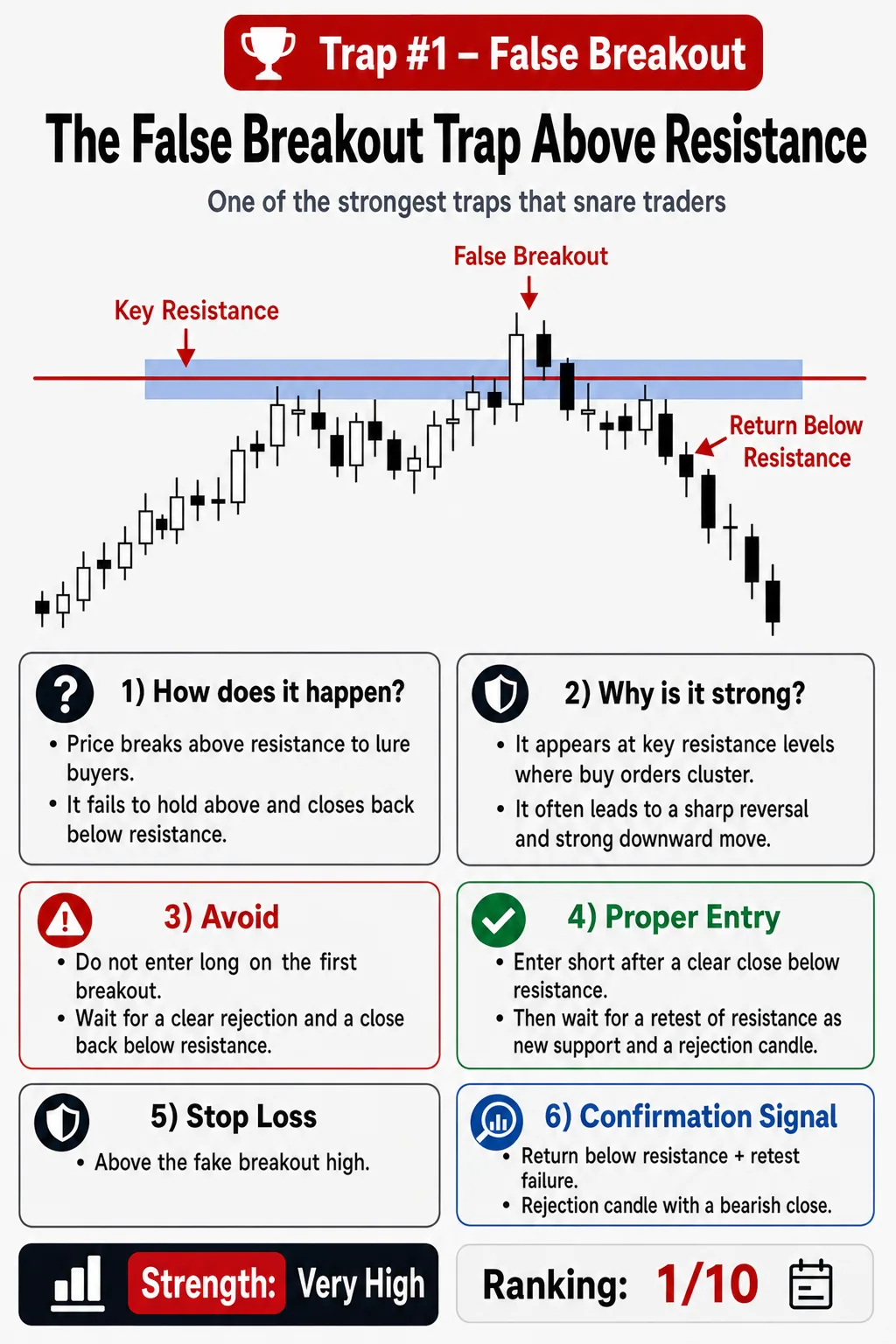
What this trap teaches
Trading trap #1 highlights a moment where the signal looks obvious, while the market may actually be testing liquidity or pulling late traders into a poor entry.
The goal is not to memorize a shape. The goal is to understand behavior: context, volume, timing, invalidation, and the exit plan.
How to read the image
Start with the context before the move: range, support, resistance, sudden acceleration, or thin liquidity. One candle is never the full story.
In example #1, focus on the trap area. A break that quickly returns inside the level often points to liquidity collection; a clean retest supports real acceptance.
Confirmation before entry
Look for a clear close, a logical retest reaction, and volume that supports the move. The more these factors align, the less emotional the entry becomes.
Without confirmation, waiting is often the best decision. A serious trader protects capital before chasing opportunity.
Common mistakes
Avoid chasing the move, increasing position size because the setup looks obvious, or widening the stop after the entry.
Always connect the trap to the session, macro calendar, and current liquidity conditions.
Practical application plan
For trap #1, write down the invalidation level, entry reason, confirmation signal, and partial exit plan before taking action.
Study the pattern historically first, then apply it live with reduced size. The objective is discipline, not prediction.